Uilleann Pipes

Showing 33–48 of 50 results

  • Mick & Aoife O’Brien & Emer Mayock: More Tunes from the Goodman Manuscripts

    £14.99
  • Mick & Aoife O’Brien & Emer Mayock: Tunes From The Goodman Manuscripts

    SKU: 1814 Categories: , , ,
    £14.99
  • Mick Louise & Michelle Mulcahy Family: The Reel Note

    £14.99
  • Mick O’Brien – May Morning Dew

    1. Statia Donnelly’s/ I Will if I Can/ Patsy Geary’s
    2. Higgin’s Hornpipe/ The Cuckoo’s Nest
    3. Kerry Reel/ Kerry Fling/ Joe Bane’s
    4. Bumper Squire Jones/ An Sean Duine/ O’Sullivan’s March
    5. Caslean an Oir/ Her Golden Hair Was Hanging Down Her Back
    6. May Morning Dew/ Sporting Nell
    7. Micko Russell’s/ Moneymusk
    8. An Rogaire Dubh/ Connaughtman’s Rambles/ Cailleach an Airgrid
    9. The Strawberry Blossom/ The Honeymoon
    10. Johnny Cope
    11. Farewell to Miltown/ West Clare Railway/ Sporting Molly
    12. Humours of Lisheen/ Tom Billy’s Fancy/ Humours of Kilkenny
    13. An Buachaill Dreoite
    14. The Camaronion/ Greenfields of Rossbeigh/ Connaught Heifers

    Press Reviews

    Irish Music Magazine

    Concert and flat pipes, whistles and Flutes not only demonstrate Mick O’Brien’s great instrumental versatility, but also make a fine job of the challenge of presenting yet another fine piping album…award this piper his pedestal and to prove that the Uilleann pipes can still do what they were designed for; self accompaniment of a primary melody. Fintan Vallely,

    Hot Press

    May Morning Dew is a snapshot of the best in trad music with not an inch left over for ego. Get your record shop to stock it and put it on their play station and you’ll be seduced utterly. Siobhan Long, 11 out of a possible 12

    Evening Herald

    May Morning Dew offers an interesting selection of tunes played in an easy unpretentious style with tasteful accompaniment by fiddler Terry Crehan and producer Garry O’Briain on Mandocello and Keyboards. This recording is one the nicest packages I’ve seen in a long time, beautifully designed with lovely photography and detailed notes. With

    Terry Crehan: Fiddle

    Mick Giblin: Guitar

    Gary O’Briain: Mandocello & Keyboards

    Seamus Brett: Piano & Keyboards

    SKU: 466 Categories: , , ,
    £14.99
  • Mick O’Brien & Caoimhin O’Raghallaigh – Kitty Lie Over

    Press Reviews

    FolkWorld CD Reviews

    The herrings are boiled and the praties are roasting, Kitty lie over close to the wall!

    The a line borrowed from the Irish jig “The Frost is All Over”. Dubliners north and south, Mick O’Brien (uilleann pipes, whistle) and Caoimhín Ó Raghallaigh (fiddle, whistle), meet. And it wasn’t in the midst of the muddy river Liffey, though one may say this record is a landmark like the newly erected Millennium Spire on O’Connell Street.

    These days there seems to be a trend to the pure drop. 15 tracks including 11 pipes/fiddle duets, 2 whistle duets, and 2 fiddle/whistle duets. The only accompaniment is the drones and regulators of the uilleann pipes. These are pitched in Bb, and the fiddle is obviously tuned down. Thus the sound is mellow and smooth.

    There is a fondness for Sliabh Luachra music, Mick and Caoimhín pay homage to the great names, Denis Murphy, Patrick Kelly. The latter is almost forgotten:

    Isn’t it shocking that with all the recordings available nowadays, you can’t get a single track of this most wonderful of fiddle players. If you were to give him a few bits of cast-off tunes, he would sculpt them into something that could fly – like making an aeroplane out of a scrapheap..

    Mick and Caoimhín give their best to continue this legacy. As Peter Browne puts it in the liner notes: Everything sounds right! Walkin’ T:-)M

    IRISH ECHO Newspaper. New York City

    CEOL Column

    By Earle Hitchner

    Top 10 Traditional Albums of 2003

    Number 1. KITTY LIE OVER, by Mick O’Brien and Caoimhín Ó Raghallaigh (ACMCD 102)

    The uilleann piping of Dublin’s Mick O’Brien first earned international recognition through his teenage performances on two late-’70s recordings, “The Piper’s Rock” and “The Flags of Dublin.

    ” In 1996, he issued a superb solo debut, “May Morning Dew,” that finished in the Irish Echo’s list of top 10 albums.

    Now comes “Kitty Lie Over,” a duet album with fellow Dublin-born musician Caoimhín Ó Raghallaigh that surpasses

    O’Brien’s earlier achievements.

    In Ó Raghallaigh, O’Brien has found a fiddler whose style is an ideal match to his tonally rich, expressive chanter, regulator,

    and drone work. This is much more than two talented instrumentalists getting together in the studio for some tunes.

    They’ve carefully worked out the repertoire (much of it drawn from Sliabh Luachra), arrangements, pitch (B or B-flat),

    and harmonies that allow them to truly marry their instruments, one complementing and extending and bolstering the other.

    Ó Raghallaigh is himself an accomplished uilleann piper and pipemaker (apprenticed to Geoff Wooff in Miltown Malbay, Co Clare), so his pipes-like style and reflexes on fiddle add immeasurably to his duets with O’Brien.

    The 11 pipes-and-fiddle tracks are wondrous, with “Woman of the House/Rolling in the Ryegrass” a shining example of this interplay, and there are also some tantalizing whistle and fiddle-and-whistle duets.

    Hands down (or should I say up?), this is the most impressive Irish traditional instrumental CD of 2003 and one of the best in many years. [Published on January 21, 2004, in the IRISH ECHO newspaper in New York City. Copyright

    SKU: 533 Categories: , ,
    £14.99
  • Mick O’Brien & Caoimhin O’Raghallaigh: Deadly Buzz

    £14.99
  • Neansai Ni Choisdealbha – Draiocht na Feadoige

    Press Reviews

    The Living Tradition Jan/15

    Well known in lreland and beyond as a broadcaster, Nancy Costello shows herself here to be an equally ?ne fluter. In a generous 21 tracks, she covers a wide range of lrish music from session tunes to slow airs, on flutes and whistles, joined by some excellent accompanists and other musicians.

    The title of this CD might translate as ‘Woodwind Wizardry’ and that would be no great exaggeration, although Nancy has no pretentions to be a Finnegan or McGoldrick.

    She breathes life into these tunes though and it’s the warmth and spirit which really comes across in her music, with enough technical skill to make her playing seem the most natural thing in the world. Most of these tunes are ones l often play myself, being a whistler, so l have to take a step back from the familiar and try to be objective.

    The material here comes from the heart of the tradition, well loved but sometimes neglected melodies. John Brennan ‘s and George White’s Favourite are great old reels, not heard so much in sessions these days. Tommy Mulhaire’s Jig is another rarity, but Condon’s Frolics is currently in favour. A set of polkas rolls beautifully off the fingers – no slides though. There are some exemplary hornpipes here too: The Navigator is a politically correct title and The Swan is rather less well known. Oiche Nollaig is a tune which is usually only heard for about one week a year, which is a shame. Redican’s Mother; The Skylark, The Green Mountain and The Lark On The Strand are all welcome as old friends. Lorna Hunter’s Reel puts a name to a tune for me, and Nancy’s Reel is a composition of Michael Hynes who joins Nancy here to play it. Fiddles, button boxes, jaw harp and the pipes of Nancy’s mentor, the iconic Meaiti Jo Shéamuis, provide duets and an occasional kitchen session sound, but most tracks are flute or whistle solos with deft accompaniment.

    Slow airs and waltzes are plentiful, some of them true solos. Taimse im Chodhladh, An Buachaillin Ban and Ballyvaughan Bay come from the lrish repertoire, while The Duchess Tree, Westering Home and Scottish Lament have crossed the North Channel at some stage.

    Alter more than an hour of fine music, Nancy launches into the pair of challenging reels, Colonel Rogers and Happy Days Of Youth, before a final house céili on four reels from Patrick’s Night to Ormond Sound. Warm, spirited and inclusive: The Magic of the Flute is a charming album which will bring a smile to the face of any lrish music fan. Alex Monaghan

    R2 Magazine Nov/Dec 14 * * * *

    Nancy Costello is one of the foremost’ broadcasters on RTE Radio na Gaeltachta, where she was appointed Head of Music in 2010.

    Originally from a Gaelic-speaking part of Galway, a small locality that has always been renowned for tradition, Nancy was first encouraged to play music by her parents.

    Accompanied by some excellent musicians, including Michael Hynes, Johnny Connolly and Eoin O’Neill, The Magic of the Flute is a varied collection of jigs, reels, hornpipes and airs, led by Nancy on flute and whistle. The playing and arrangements are solidly traditional.

    Nancy is a very capable flautist with a rock-steady rhythm. Her version of the C reel ‘Swinging On The Gate’ is beautifully played, with each rolling triplet adding to the flow of the tune. Likewise, Nancy is similarly adept on the whistle, as her excellent playing of ‘The Sweep’s Hornpipe’ demonstrates. The majestic slow air, ‘Taimse lm chodladh is na duistear Mé’ (I am Sleeping, do not awaken me) is, for me, a highlight of the CD. Here Nancy nicely decorates the melody and plays with true emotion.

    Draiocht Na Feadoige translates as the ‘Magic Of The Flute’, which is a very fitting title for this lovely CD. Keith Whiddon

    www.liveireland.com

    One of my favorites is by a terrific flute player named Nancy Costello from the Connemara in Ireland. The title: The Enchantment of the Flute on Clo Iar-Chonnacht. There are 21 cuts of fab fluting. Good heavens, this girl can play. I’m going to suggest that you get to the Clo Iar-Chonnacht website or Alan O’Leary at Copperplate Distribution in London to get this. Why? For some reason, this cd has the title, ‘Draiocht Na Feadoige’ by Neansai Ni Choisdealbha. Good God. That translates to Enchantment of the Flute by Nancy Costello. The title cannot possibly help sales, and that is a shame. All 21 tunes here are played impeccably in a gorgeous style. Nancy is a master musician. We will be playing this a lot on our LiveIreland show to help introduce this wonderful talent. Part of the fun will be to try to pronounce it. We can hear the purists calling in now. This is a terrific album, and qualifies Nancy for serious consideration as Female Musician of the Year. Bill Margeson

    SKU: 916 Categories: , , , ,
    £14.99
  • Neill Mulligan – An Tobar Gle

    Press Reviews

    FolkWorld CD Reviews

    Séamus Ennis used to tell a lovely story of how a piper got [The Gold Ring] jig from the fairies after coming across a fairy session late one night and finding a gold ring after disturbing the proceedings. On returning with the tiny gold ring the next day he was rewarded by a grateful fairy with the tune that the piper was playing the previous night and The Gold Ring was the title that the piper gave to the tune from that day forth.

    Séamus Ennis was the spiritus rector of uilleann piper Neil Mulligan. In the 1970s, when Séamus ran a traditional club in Slattery’s pub of Capel Street, Dublin, called An Tobar Glé (i.e. the clear/bright well), Neil was one of the resident musicians. Neil also has fond memories of Séamus’s father Jim Ennis coming on visits to our house when I was a young boy and telling wonderful stories to us all. He certainly followed the piper’s instruction that a piper should spend seven years learning, seven years practising, and seven years playing before calling himself a piper.

    Neil has been through to this. He brings to life the legacy of Ennis, but he also recalls the other heroes of the Irish piping tradition, Willie Clancy, Leo Rowsome, and even sean-nós singer Seán ach Dhonncha from Carna who influenced Neil’s attitude to the playing of slow airs. Again it was Séamus Ennis who always insisted on the importance of understanding the Gaelic words.

    However, it was Neil’s father Tom being the source for most of his tunes, and the album finishes off appropriately with two home recorded sets from 1982 featuring the late Tom Mulligan on the fiddle. Neil prefers the art of solo piping, he says: Unless you’re into buying and listening to CDs, there’s no place to hear it. There’s nowhere like Slattery’s today. And music is all speeded up — everybody seems to have a bouzouki or guitar player in tow.

    This is the pure drop from the well of tradition. Walkin’ T:-)M

    CHANNEL 4 TV TELE TEXT

    NEW ROOTS

    The Piper Calls the Tune.

    A protégé of greats like Leo Rowsome and Seamus Ennis, not to mention his own dad, Tom. Neillidh Mulligan is steeped in the greatest traditions of ulleann piping.

    His third album, An Tobar Gle (The Bright Well) proudly maintains these rich traditions with a masterful display of top tunes.

    In an age of hybrids and cultural crossover, it’s also refreshing joy to hear the pure art of the musician. COLIN IRWIN

    The Journal of Music in Ireland Nov/Dec 2003

    One of the driving influences in the development of traditional music is the process of transmission.

    Maybe transmission is not always how it looks and feels at first hand – within the community of practitioners of traditional music, we often talk about getting things from others, we talk of learning from others, We rarely say that we took anything from anybody. For us, things just get passed on deliberately or by chance, by somebody specific or by somebody who knows somebody, yes, it does sound shady, We pick things up. Maybe from time to time they fall off the back of the proverbial lorry! The right time and the right place are important in this music.

    Only rarely does the idea of reciprocation come into it, although we do stray into this territory when we talk of being ‘influenced by or ‘following in the tradition of’. Some musicians will create their own sound world around the music of one or more significant players who they were lucky enough meet. Some musicians will follow a path that is more or lest, mapped out by others whose music and musical attitude made enough of an impression on them, even from a distance in space of time, to determine their personal musical choices and direction into the future.

    These ways into the transmission process are visible to a greater or lesser degree throughout the entire practise of traditional music, song and dance, in my view; they are especially prominent in a few elements of the instrumental tradition and also in the song traditions of our two principal languages. Within the instrumental tradition, the amazing world of piping and pipering stands out.

    The particular culture around the instrument itself, the piperosity of its players, the way players influence and lead others, and the act of performance of music on this instrument all lend extra weight to standard notions of transmission and legacy.

    ln this context, An Tobar Gle, the new album from Neil Mulligan, presses many of the right, buttons for me, nor least in the quality of the relaxed playing that Mulligan presents here.

    He comes across as relaxed and confident to the extent that the pure musicality of performance takes precedence over any aspirations to faultlessness of performance and I think this works really well in this case. Listening to An Tobar Gle for the first time, I was struck by two things.

    First, the extent to which Mulligan very comfortably inhibits what is an exclusive enough territory, and not one into which any piper wisely strays either unprepared or by chance – the Ennis school of piping. Choice of repertoire is only one indicator of Mulligan’s debt to Ennis. What makes for much more interesting listening to my ear, is how Mulligan interprets other tunes (‘other’ meaning not from the Ennis canon) through the filter of Ennis’s approach which is by far the strongest influence on his playing here.

    On An Tobar Gle, we get a very clear sense or how Mulligan has internalised and re-expressed in his own voice, a particular approach to rhythm, ornamentation and overall sound that is clearly indebted to the Ennis school, with many shades of other influences as well. Frankie Lane’s informed approach to the recording and engineering of An Tobar Gle also suggests a relaxed confidence – is it not about time that we were allowed to hear pipes being played enjoyably in a room sound just pipes being played enjoyably in a room.

    The second thing that struck me was the graceful and respectful way in which Mulligan discloses his relatively privileged access to all of the significant routes into the transmission processes have made him the musician he is today.

    The reason Mulligan is good is not simply that he knew anybody in particular, it’s that he knows exactly what it means to have known them and he has made musical sense of all of this. Aside from the solo piping which acts as a musical mirror Mulligan’s development as a musician, there is a constant grounding effect in the notes to the performances. Everything has come to Mulligan from somebody somewhere and the way he sets about ‘owning up’ to this adds immeasurably to the sense of authenticity that pours from his music.

    Hence the inclusion of two sonically difficult tracks derived from home recordings of Neil and his father, Tom, which do jar on the ear on first hearing, but also explain much of the rest of the music on the album. The visual material in the liner notes are presented in a warmly conceived design by Edain O’Donnell and they reinforce the importance of the people who make and keep tradition alive and dynamic as any contemporary artform must be if it is to make sense.

    I was delighted to hear four new compositions of Mulligan’s on this album. These show another dimension to his musicianship – he is well aware of both the tradition and the limitations that go with the instrument, but he is game to tackle these to good effect, particularly in the air ‘Caitriona Rua’ and the reels An Tobar Gle’ and ‘Oilean na Meannain.

    As an accurate musical portrait of a man who has given so much to piping and who has so much still to say, An Tobar Gle does the business.

    Dermot McLaughlin (Donegal Fiddler)

    From www.irishmusicreview.com

    Finally, replete with informative notes on the tunes and plenty of archive photographs, the album’s beautifully designed liner should serve as a model for other small independent labels. Geoff Wallis

    Pay The Reckoning, October 2003

    Pipers are few and far between. The task of mastering the instrument’s intricacies and idiosyncrasy is beyond most musicians and consequently only a few, a devoted and courageous few, stick the pace.

    Thank God Mulligan didn’t take the path of least resistance, because An Tobar Gle shows what a consummate musician he is. There are no niches and alleyways in which to lurk as a solo musician. The “line of sight” into the piper’s heart and soul is perfectly clear. We feel every shift in mood, every doubt, every worry, every up-welling of joy. Because music played at the level at which Mulligan operates is nothing to do with “the dots”. Instead it’s about communicating the tune, or rather his version of the tune, with all of its humours and notions, to the listener.

    Some fine dance sets such as “East Of Glendart/I Buried My Wife And Danced On Top Of Her”, “The Morning Thrush/Colonel Frazer” and “An Fainne Oir/Airgead Realach” are interspersed with tremendous airs, such as his moving version of “A Stor Mo Chroi” and a jaw-droppingly fine rendition of “Taimse im’ Chodladh”.

    Mulligan is as good a writer of tunes as he is a player. “An Tobar Gle”, “The Dooneen Reel “and “Oilean Na Meannain” are as infectious and memorable as any of the traditional material on the album and warrant becoming part of anyone’s repertoire.

    However the most beautiful of Mulligan’s self-composed tracks on the album is a slow air dedicated to the memory of his mother. “Caitriona Rua” is a fitting ode to a deeply loved and sorely missed mother.

    Mulligan’s love and respect for his family is demonstrated further. The album contains two tracks on which Mulligan duets with his late father, Tom Mulligan – “The Fermoy Lasses/The London Lasses/The Rose In The Garden” and “Chase Her Through The Garden/Kiss Her In The Furze”. Although recorded on primitive domestic equipment, the quality of the playing and the very obvious musical bond between father and son overcome any doubts about the technical aspects of the recording process.

    This shockingly good album is available from the increasingly influential and consistently discerning at Copperplate.

    Taplas, The Welsh Folk Magazine. Oct/ Nov 2003

    Mulligan is something of a purist’s musician. His third CD of uilleann piping is, again, unencumbered by accompaniment.

    Don’t expect brazen virtuosity or fireworks either: Mulligan can rattle out the reels with the best of them, but his style remains measured and tasteful with a judicious use of ornamentation and variation that never draws attention to itself.

    His three sets of pipes (including one made by Leo Rowsome for Felix Doran) are beautiful-sounding instruments and the varied choice of tunes is never arbitrary. As the sleeve notes explain, every tune, from well-known standards like The Gold Ring or Donal Óg to some interesting ones of his own, is there because of some association or connection, sometimes to his late father, who as a musician was Mullligan’s greatest influence, or one of the circle of players around Rowsome and Seamus Ennis. John Neilson.

    Musical Traditions Web Site 9.03

    An Tobar Glé is an unquestionably exquisite example of the piper’s art and confirms Neil Mulligan as one of the instrument’s supreme contemporary exponents. Geoff Wallis – 3.09.03

    Hot Press 17.703

    The third album by Dublin piper, Neil Mulligan is as excellent as one would expect from this master musician. There’s a splendid solidarity and authority to his playing, particularly on slow airs like Stor Mo Chroi, Donal Og and th epoignant Caitriona Rua written by Mulligan after the death of his mother. Other originals include th etitle track, a rollicking jig in honour of a folk club run by Seamus Ennis at Slattery’s in Capel St during the 70’s. Like it’s predecessors, the CD features pure unadulterated solo piping — which is just as well, as any accompaniment would have been rendered superflous by Mulligan’s adroit use of his instrument’s full range, complete with drones and regulators. Extensive notes on the jacket tell the stories behind the tunes and reveal the writer’s affection for the music. Sarah McQuiad. 9 OUT OF 10.

    The Irish Times.

    Piper Neil Mulligan is back, as exuberant in his playing as ever. His taut rendition of The MorningThrush and Colonel Fraser is a tribute to their original caretakers, Seamus Ennis and his father, Jim, and a fitting bedrock underpinning a rake of fine tunes that shimmy between his armpit and dancing fingers. Rhythm masters of any hue would do well to cock an ear to I Buried My Wife, not for and Soprano-esque top tips, but for the taste of how organic timekeeping can soaar. Mulligan’s own jigs, including the eponymous opener, are a shot in the arm for the pipes, with enough buoyant optimism to carry them well into the belly of the 21st century. Siobhan Long.

    SKU: 529 Category:
    £14.99
  • Niamh de Burca: Where The Heart Lies

    £14.99
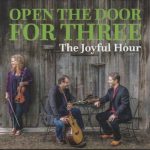
  • Open The Door For Three: The Joyful Hour
    Open The Door For Three: The Joyful Hour

    Open the Door for Three is fiddle player Liz Knowles, uilleann piper Kieran O’Hare, and Dublin-born singer and bouzouki player Pat Broaders. Their music is a rare combination of unearthed tunes from centuries-old collections, newly composed melodies, fresh arrangements of songs old and new, homages to the musicians and bands they grew up listening to, and the unmatched energy of a trio of good friends playing great Irish music together.

    “A road-tested, audience-approved, high-octane, fist-in-glove, laughing-out-loud trio of Irish musicians…” “Theirs is a big and brilliant sound!” — Sean Smith, Boston Irish Reporter

    Liz, Kieran, and Pat have been mainstays of the Irish music scene around the world, having distinguished themselves over the last two decades as soloists with Riverdance, Cherish the Ladies, String Sisters, Secret Garden, Anúna, and The New York Pops. As a trio, they have played to a wide range of audiences in venues large and small, from Irish festivals, to concert halls, house concerts, and pubs. They have performed around the world: on Broadway and at Carnegie Hall, at L’Olympia and the Palais des Congrès in Paris, in Malaysian rainforest festivals, in theatres from Shanghai to São Paulo, and even in a bullring in Mallorca. Most recently, they have been featured at The Kennedy Center’s Ireland 100 festival, the Celtic Colours festival in Cape Breton, at The Milwaukee Irish Festival, and in The Masters of Tradition series in Bantry, County Cork, Ireland.

    Irish music is a living, breathing part of Irish and Irish-American culture, and there is no single story that can sum up its history, its charm, grace, and drive. The soul of Open the Door for Three’s music is filled with connections: the connections to people and places, to teachers and heritage and audiences, and to the stories and humor that bring us all together. From these connections comes inspiration, which fills a bottomless well that keeps the trio coming back again and again – to refill, refuel, reinvent, and share.

  • ÓRiada sa Gaiety

    £14.99
  • Paul Brennan: Airs and Graces

    £16.99
  • Rig The Jig: Live in Dublin

    £16.99
  • Solas: Another Day

    £14.99
  • The London Lasses: LL 25th Anniversary Album

    £14.99
  • Treasa Ni Mhiollain: Lan Mara

    £16.99
(0)