Bozouki
Showing 33–48 of 50 results
-
Open The Door For Three: The Joyful Hour
Open The Door For Three: The Joyful Hour
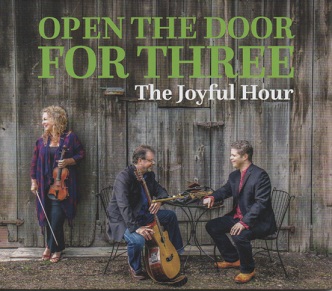
Open the Door for Three is fiddle player Liz Knowles, uilleann piper Kieran O’Hare, and Dublin-born singer and bouzouki player Pat Broaders. Their music is a rare combination of unearthed tunes from centuries-old collections, newly composed melodies, fresh arrangements of songs old and new, homages to the musicians and bands they grew up listening to, and the unmatched energy of a trio of good friends playing great Irish music together.
“A road-tested, audience-approved, high-octane, fist-in-glove, laughing-out-loud trio of Irish musicians…” “Theirs is a big and brilliant sound!” — Sean Smith, Boston Irish Reporter
Liz, Kieran, and Pat have been mainstays of the Irish music scene around the world, having distinguished themselves over the last two decades as soloists with Riverdance, Cherish the Ladies, String Sisters, Secret Garden, Anúna, and The New York Pops. As a trio, they have played to a wide range of audiences in venues large and small, from Irish festivals, to concert halls, house concerts, and pubs. They have performed around the world: on Broadway and at Carnegie Hall, at L’Olympia and the Palais des Congrès in Paris, in Malaysian rainforest festivals, in theatres from Shanghai to São Paulo, and even in a bullring in Mallorca. Most recently, they have been featured at The Kennedy Center’s Ireland 100 festival, the Celtic Colours festival in Cape Breton, at The Milwaukee Irish Festival, and in The Masters of Tradition series in Bantry, County Cork, Ireland.
Irish music is a living, breathing part of Irish and Irish-American culture, and there is no single story that can sum up its history, its charm, grace, and drive. The soul of Open the Door for Three’s music is filled with connections: the connections to people and places, to teachers and heritage and audiences, and to the stories and humor that bring us all together. From these connections comes inspiration, which fills a bottomless well that keeps the trio coming back again and again – to refill, refuel, reinvent, and share.
-
Providence – A Fig for a Kiss
- The Road to Lisdoonvarna / Carthy’s Reel / The Mermaid of Mullaghmore. (4.16)
- Smuggling the Tin. (3.20)
- The Lurgadaun / Dancing Eyes / Down the Back Lane. (3.44)
- The Curlew Hills / Father Dollard’s. (4.04)
- Will Ye Go to Flanders. (4.02)
- The Arragh Mountains / The Rakes of Westmeath / A Fig for a Kiss. (3.55)
- The Providence / Roscommon Reels/ Fred Finn’s. (4.24)
- Muiris O Coinnleain. (3.10)
- McDonagh’s Air. (4.08)
- The Jolly Young Ploughboy. (3.37)
- In Memory of Coleman / Farewell to London / The Sunny Banks. (3.20)
- Se Fath Mo Bhurtha. (3.42)
- Music in the Glen / Sean sa Cheo. (4.14)
Providence
Providence have just completed a very successful year of gigging which saw them release their second album A Fig for a Kiss, RoRi CD 002, on their own label Rolling River Productions. Their eponymous debut album received great acclaim both in Ireland and abroad. The band’s first tour outside Ireland brought them to the Arctic Circle for St. Patrick’s Day. The band also appeared at some major European festivals during the summer including Dranouter Festival in Belgium and Waidhofen Festival in Austria, the Finnish Irish Folk Festival Tour as well as making numerous appearances around Ireland, Éigse Mrs Crotty, Mary of Dungloe Festival and the world famous Queens Festival in Belfast to mention but a few. Providence were also special guests on the prestigious Iain Anderson Show on BBC Radio Scotland prior to an appearance at the Callander Festival. Since the launch of their second album the band have featured live on the legendary John Creedon Show, RTÉ Radio 1 and on RTÉ TV’s Open House. They also featured on the award-winning series on TG4 Geantraí. Apart from touring Ireland in February the band will also be touring Italy, Germany, UK, Norway and the USA over the coming months.
Providence are:
Joan McDermott from County Wexford is the group’s singer. Joan formerly sang with the famed a cappella group The Fallen Angels which included Frances Black and Máire Bhreathnach among its ranks over the years. Joan toured extensively with the Fallen Angels and appeared at many major festivals including Cambridge Folk Festival, Leysin Rock Festival in Switzerland, and Fairport Convention’s Reunion Festival. She has also performed with Kieran Halpin, Kieran Goss, Steve Cooney, Manus Lunny, Mark Kelly, and Macalla among others.
Mícheál Ó Raghallaigh hails from a musical family in County Meath. He has played concertina and accordion from an early age. Mícheál has taught workshops and has toured all over Europe and the USA. He is also a member of the three-time All-Ireland winning Táin Céilí Band.
John Wynne plays flute and whistle. From Roscommon, he was immersed in the North Connacht flute tradition, playing with such eminent players as Patsy Hanly, Tommy Guihan, and Peter Horan to mention a few. John has won numerous All-Ireland titled for whistle and flute. He plays and teaches at various workshops and festivals around the country.
Clodagh Boylan also comes from a musical family from Glenullin, Co. Derry. She plays with members of her family in the Gleann an Iolair Céilí Band. She has toured England, USA and Australia extensively with Comhaltas Ceoltóirí Éireann and has also toured Italy with All Set.
Paul Doyle is the band’s bouzouki/guitar player. Formerly he was a member of Arcady which included Frances Black, Sharon Shannon and Cathal Hayden. Paul also played with Martin Hayes, the Máire Bhreathnach Band, and the Seán Keane Band with whom he toured such countries as Poland, Germany, Finland, Sweden. Over the years Paul has also recorded with many of Ireland’s most respected musicians among them Matt Molloy, Paul O’Shaughnessy, Paul McGrattan, Gay McKeon, and Arty McGlynn.
Press Reviews
Pay The Reckoning August 2002
Pay The Reckoning has already waxed lyrical over the solo CD “The Nervous Man”, by Providence’s concertinist and accordionist Micheal O’Raghallaigh. We are no less impressed by this, the second CD by one of Ireland’s most exciting traditional groups, which in addition to O’Raghallaigh comprises Clodagh Boylan (fiddle), John Wynne (flute, low whistles), Joan McDermott (vocals) and Paul Doyle (guitar, bouzouki, backing vocals, bodhran).
The instrumentation invites comparisons to Altan, and indeed if Providence have musical peers, then the Donegal-based outfit are a convenient reference point. (Or at least the early incarnation of the band, when Frankie Kennedy was still with us and the band were wedded to exploring the rich musical traditions of North-West Ulster.) However, although they may be as exciting, as vibrant and as accessible (without ever diluting the music) as the early Altan, Providence plough their own furrow, and a deep and productive furrow at that.
The album’s opening is perfectly judged to raise the hairs on the back of the tradophile’s neck. The opening reel in the set of three (The Road To Lisdoonvarna/Carty’s Reel/The Maid Of Mullaghmore) kicks off with Boylan underpinning O’Raghallaigh’s edgy concertina with an eerie, bittersweet drone. The tension between the two instruments builds to a climax at the end of the first go-round and then, as we knew – or hoped – resolves at the repeat as Boylan picks up the melody with O’Raghallaigh. Wynne takes up the rein for the second tune and then all democracy breaks loose as the band give the final reel (long associated with John Doherty) a lash.
The precise yet characterful playing and intelligent, uncluttered arrangements witnessed in this first set set a standard for the album which Providence never after fail to meet. On reel sets such as “The Providence Reel/Roscommon Reel/Fred Finn’s”, “In Memory of Coleman/Farewell To London/The Sunny Banks” and “Music In The Glen/Sean Sa Cheo”, the same spine-tingling mixture of control and abandon is in evidence. McDermott’s voice is a revelation. Clear as a bell, unforced and untainted by any form of “artfulness”, she is utterly compelling in her renditions of “Muiris O Coinnleain” and “Se Fath Mo Bhuartha”. However her best work is reserved for the English language songs “Smuggling The Tin” and “The Jolly Young Ploughboy”. The former is a great comic song from the Second World War when there was a trade in smuggled tin between Northern Ireland and the Free State and concerns the misadventures of a group of hapless reprobates whose efforts at lawlessness come to nothing. The second, originally from England, McDermott picked up from the singing of the saintly Frank Harte and delivers with great commitment. (Incidentally, are we alone in detecting in the song’s air the embryo of the tune of that American folk classic “Jesse James”?)
Two tune sets in particular are worthy of special mention. The jig set “The Lurgadaun/Dancing Eyes/Down The Back Lane” is instantly gripping and as fine an example of ensemble musicianship as you’re likely to hear. And as for the hornpipe set “The Curlew Hills/Father Dollard’s”, we’re at a loss to describe the inventiveness and sophistication of the band’s mastery of the crooked rhythm. The second tune in this set in particular must surely rank as one of the most definitive of Irish hornpipes.
“A Fig For A Kiss” is the sort of CD which, given a wide audience, will establish Providence at the very forefront of the trad mob! So, do your bit for a great band; via http://go.to/copperplate and order a copy for yourself (and your friends – converted and non-believers alike!). For more information about the band itself, visit http://www.providence-trad.com
The Living Tradition. 01/02
I first came across Providence after hearing John Wynne’s solo flute album. Wanting to hear more, I bought the groups first album and liked it. This is their second, which is usually the trickiest for anybody. Not to worry, this is up to the standard of the previous outing. The only line up change is Clodagh Boylan on fiddle instead of Meabh O’Hare The instrumental balance is slightly different with a wee bit more prominence to Micheal O’Raghallaigh’s concertina this time out, but that’s no harm. They’re not out to make a particular sound, but to show different blends of instruments
Seven dance tracks, one slow air and five songs with nothing you wouldn’t be happy to listen to for a long time. The Road to Lisdoonvarna is mostly played as a jig, odd times as a reel, but Providence play a fling version that works well. The other tunes are a mix of old friends and less widely known tunes.
They’ve even adapted a tune learded from the McDonagh brothers of Ballinafad as a waltz and made a slow air of it. It probably was originally an air, as many of the older players used to play airs in 3:4 time, so they’ve restored it to its rightful place.
I get the feeling that Joan McDermott is more at home with the two songs in Irish than the three in English. Maybe they’re more suited to her singing style, but they do flow more easily. None of the songs are hackneyed though and include some gems. She’s done her homework in the National Archives, and found a fine song in ‘Muiris O’ Coinnleain’, from the Waterford tradition.
Providence have overcome the dreaded ‘second CD’ hazard; we’ll see more of them in future. Mick Furey.
Taplas Dec/Jan 02 (The Welsh Folk Magazine)
As I had predicted, Dublin based Providence’s second album marks a significant advance on their debut. When I reviewed that, I claimed their fiddler was Claire Boylan, Oops! On that CD it was Meabh O’Hare, whom Boylan replaces this time round. Otherwise, the line up is unchanged, with Roscommon flute player John Wynne and concertina player Micheal O’Raghallaigh very much to the fore. I still have reservations about singer Joan McDermott and really dislike the sleeve design. But, don’t let that put you off. This is fine traditional Irish music played with great swing and vitality. Nick Passmore.
Teletext
Some strong Irish albums emerge on the horizon, notably Providence’s A Fig For A Kiss. Top notch instrumentals plus a classy singer in Joan McDermott supplying a light and shade that bears comparison with the immortal Bothy Band. Colin Irwin
Hot Press
The Irish music scene is blessed with an embarrassment of riches where traditional bands are concerned, with outfits such as Sliabh Nulor, Dervish and many more appealing to a variety of constituancies. To that list must now be added the name of Providence. A Fig For A Kiss is their second album, and quite an advance on their debut. A sound, which will be refined even further, is beginning to evolve – a lively interplay between fiddle, flute and double leads, heard to fine effect on tunes sets like, The Road to Lisdoonvarna and The Arragh Mountains, jig set.
There is great internal space created within these tunes, with lead instruments dipping, weaving and walloping where appropraite, and backed up by Paul Doyle’s ever solid guitar work never threatening to overwhelm either the music or the listener.
In every crown there is a jewel and for this listener it’s the voice of Joan McDermott, bell like in its clarity, skittish as a young pup on Smuggling The Tin and solemn as is appropriate on Se Fath mo Bhurtha. With this album, Providence have done themselves a wealth of good, and I’d venture to say that it is one of the finest records of the year so far. Oliver P. Sweeney 10 out of 12
The Examiner
Dark fiddle provides the opening drone for the jaunty concertina driven fling, The Road to Lisdoonvarna. The tune develops nicely, maintaining its shape with the addition of flute and a drop of an octave on the fiddle. This is Providence, more mature and more assured than before.
A Fig for a Kiss is a mix of tunes and songs, a well designed vehicle for the individual and collective talents of Clodagh Boylan, fiddle; Micheal O’Raghallaigh, concertina/ accordion; John Wynne, flute/whistles; Joan McDermott, vocals and Paul Doyle, guitar/ bouzouki/ bodhran. There is a natural interplay on Junior Crehan’s sprightly Lurgadaun Jig, with an increasingly dense sound leading into Dancing Eyes. Precise fiddle opens The Curlew Hills, a second cousin of The Glenbeigh Hornpipe. The bands signature tune, The Providence Reel, is given a special surge of power, as is its follow up, Roscommon Reel. Fred Finn’s has a hint of raggedness that gives the music its fourth dimension. Doyle’s guitar comes to the fore on an air learned from the McDonagh Brothers of Sligo. He may rarely emerge from the background, yet his playing is the glue that holds the Providence sound together. The songs have a good balance. Smuggling The Tin, refers to cross – border trade during the Second World War. Will Ye Go To Flanders is an 18th century Scotish anti war song. The album closes with a live set, Music In The Glen/ Sean sa Cheo, recorded at Dougie McLean’s bar in Taybank, Scotland. Pat Ahern
£14.99 -
Seamus Quinn & Gary Hastings – Slan le Lough Eirne
- The Kiss Behind the Door / Bonnie Ann / The Granny in the Wood.
- The Humours of Ballyconnell / Swinging on the Gate.
- The Mayo Snaps / The Boys of the Town.
- Paddy Kiloran’s Highland / Hannah Mhici Mhicheail’s.
- Farewell Dear Erne, I Now Must Leave You.
- The New Copperplate / Patsy Hanley’s.
- The Bugle Hornpipe / Number 5.
- Edward the Seventh / The Lark on the Strand.
- The Shaskeen.
- The Banks of the Clyde.
- Na Ceannabhain Bhana / Dever the Dancer.
- P. Flanagan’s / The Gossoon That Beat His Father.
- The Maids of Castlebar / The Morning Star.
- Last Nights Fun / The Sligo Maid.
- The Heel & Toe / Devlin’s.
The three first met in Coleraine University. Gary is now Church of Ireland rector in Westport, Seamus is a Catholic priest in Monaghan, and Ciaran is from the parish of Altan. Seamus plays fiddle, Gary plays flute and Ciaran plays bouzouki. This is superb music, much of it based on the tradition of County Fermanagh where Seamus grew up. These men had the same mentors as Cathal McConnell, the musicians of South Fermanagh and North Leitrim. Seamus also has a special allegiance to the music of Coleman, and the couple of slow airs included are based on the songs and style of Fermanagh. It’s as good as you are going to hear. Claddagh Records
£14.99 -
Sean O’Driscoll – So There You Go
Biography.
Seán O’Driscoll hails from Blarney, County Cork and comes from a very musical family. His father was a respected accordion player, who along with his three brothers made up the well-known O’Driscoll Ceili band, who played widely throughout County Cork in the days before amplification.
Seán is one of the most versatile musicians playing Irish music today. Although he first gained recognition for his virtuoso banjo playing, he is equally adept on guitar, accordion, bouzouki and mandolin. His natural musical ability extends to composition with many excellent tunes and songs to his credit. Playing strictly by ear, his memory holds a massive repertoire.
Seán’s compositions have been recorded by Laurence Nugent and Kevin Burke among others.
He has played widely in the United States, Europe, New Zealand and Australia. For many years he toured America with noted accordion player and tune collector, Paddy O’Brien, and is a member of the well known band, The Irish Rovers.
The impressive list of other musicians he has played and recorded with include: Larry Egan, Vince Milne, James Keane, Martin Hayes, Larry Nugent, James Kelly, Liz Carroll, Jerry O’Sullivan, Jimmy Crowley, Dave Hennessy, Mick Daly, Peter Ostroushko, and Seán Maguire.
When Seán returned permanently to Cork in 1997, he discovered that all the popular Sunday afternoon sessions that he remembered had disappeared. With his wife, Mary, who plays fiddle, he started a 12.30 session in the Ovens Bar, Cork City. Many local and well-known musicians have helped anchor the tunes over the years, including the sadly missed, Seamus Creagh on fiddle. Some years ago the session migrated to Charlie’s Bar on Union Quay, and now almost sixteen years since that first Ovens session it has become an institution. Starting at 3pm, the session features guest musicians from anywhere and everywhere and continues until 6pm, although sometimes much later if the right combination of musicians, singers and listeners appear. There is never a dull Sunday in Charlie’s!
Also featuring Sean and available from Copperplate: CICD 155 Sean O’Driscoll & Larry Egan: The Kitchen Recordings
The Kitchen Recordings are just that, a refreshing and lively collection of tunes recorded in Seán’s kitchen with the terrific young Wicklow accordion player, Larry Egan.
It began as an experiment, Larry using BC fingering on Seán’s grey C#D Paolo Soprani accordion and Seán using a capo on the banjo. The resulting sound was so bright and fun that they didn’t stop playing until it turned into an album.
On this Cló Iar-Chonnachta CD there’s no cutting and no fixing, giving it the energy and life of a live recording; a feel good album and one that even non trad fans go back to time and time again
Press Reviews
The Living Tradition June/July issue
Sean O’Driscoll is a fine tenor banjo and bouzouki player from Blarney in County Cork. So There You Go is his second solo album, on which he is supported by Larry Egan on accordion; Patrick Egan on concertina; Dave Hennessy on melodeon and Donncha Moynihan and Johnny Neville on guitar.
This excellent album opens with a lively set of polkas played in American ‘honky-tonk’ style. In sharp contrast, on the slow air The Dear Irish Boy, the bouzouki and banjo arrangement is D unusual and hauntingly beautiful.
In addition to traditional jigs, reels and hornpipes, So There You Go features several of Sean’s own compositions. The Comical Bargain/Bare Faced Lies pair of reels and The Twin Cities jig are fine tunes worthy of being played in any good session. The CD concludes with Sean’s lovely Lendrum’s Waltz, on which he plays button accordion, harking back to his ceili band days.
Some years back, I had the great fortune to play in a session with Sean in Friel’s bar, Miltown Malbay. What struck me then was Sean’s uniquely subtle banjo style
£14.99 -
Teada
Press Reviews
Irish Dancing International March 2003
Sharp eyed readers of this column will recognise any references to Oisin MacDiarmada, the fiddler with this band, Teada, as the self same that ran away with our ‘Album of the Year’ in December’s issue. Since last year, Oisin has moved on and now jets around the world with Teada, one of a core of excellent, young trad Irish bands.
The band comprises Oisin, John Blake, Sean McElwain, and Tristan Rosenstock. John is a Londoner and when he first came to Ireland, his forte was acoustic guitar. He is also a multi-instrumentalist and an excellect ‘fluter’, (I know I could say flautist, but tradders hate that), Sean brings more strings in the form of the banjo and the bouzouki. Tristan completes the quartet with virtouso bodhran talent and backing vocals. Oisin himself is noting short of a genius when it comes
to playing the fiddle, as we already eulogised in the December issue.
And so to this, their debut album. It’s a fine album indeed and those with a keener understanding of the finer points of Irish trad that myself have spoken volumes about it. It is a fair compendium of jigs, reels and hornpipes and a significant confidence builder forthe group in these early years. It’s a pointer to what we might expect in a year or two. Donal Lynch.
Folk On Tap March 2003
Here we have another young band emerging from the Emerald Isle playing traditional tunes on a variety of instruments, led by a fiddle or a flute, backed up by tenor banjo, bouzouki, piano and bodhran. Their playing is slick and professional as you might expect froma country so steeped in traditional music and musicians, but a creeping suspicion nags me, a sense of deja-vu perhaps. Haven’t we heard this music before, in fact many times over?
There have been so many good Irish bands playing reels, and jigs, with the occasional song thrown in for good measure, that I find hard to differentiate between them anymore. That said, however, they are at least as good as anything that has gone before, but not ground breaking and inovative they are not but maybe, they don’t want to be. Phil Hugill
The Irish Echo Téada comes with “strings” attached By Earle Hitchner
Youth is very well served on “Téada,” the Irish word for “strings” adopted as the name of a new band and their debut album on their own Sligo-based imprint, Ceol Records.
The accent on strings comes from 24-year-old, Clare-born Oisín Mac Diarmada, the 1999 All-Ireland senior champion on fiddle, London-born John Blake on guitar, and Monaghan’s Seán McElwain on bouzouki and tenor banjo. Mac Diarmada also sings and plays whistle and piano, Blake adds flute, whistle, and piano, and Dublin’s Tristan Rosenstock, Téada’s fourth member, plays bodhrán, so this “string thing” really only goes so far. (I mean, is Altan with two fiddlers, two guitarists, and a bouzouki player also a “string” band?)
Semantics aside, “Téada” represents a fresh force in Irish traditional music. Two years ago, Mac Diarmada made an excellent recording with Monaghan harper Mícheál Ó Ruanaigh and Limerick banjoist Brian Fitzgerald, and guesting on that album were Blake and Rosenstock, so the rudiments of Téada were largely in place then.
Part of what makes their debut CD impressive is the variety of moods and tempos they achieve. The band opens the album not with a customary blast of reels but a hornpipe and jigs medley that is admirably paced, especially by Mac Diarmada’s tender fiddling of “Tom Connor’s Hornpipe.” In “Teresa Halpin’s/Rathlin Island/Michael Hynes’,” McElwain’s banjo and Rosenstock’s bodhrán establish at the outset a steady, rhythmic pace that gains in power with Mac Diarmada’s fiddle and Blake’s flute coming in on the second reel. Then the third reel shifts into almost a céilí band sound, as Blake doubles on piano and McElwain adds bouzouki to the mix.
There’s a lot of adroit dueting — fiddle and flute, flute and bodhrán, bodhrán and banjo, banjo and fiddle — within the arrangements. This juicy subtext courses through the main musical reading and piques the overall listening pleasure.
Fiddle and banjo, for example, shoulder the melody throughout “The Liffey Banks/Pat Molloy’s” reels, backed at first by guitar and then by guitar, piano, and bodhrán. Fiddle and flute start off “The Surround/Up in the Garret/Port na Deoraí” slip jigs, then give way to flute and bodhrán, then to banjo and fiddle. The progression is natural, not constrained, and changes between tunes are like smooth hand-offs in a relay race, with no strides broken.
“Tom Roddy’s,” a tasty jig written by Mac Diarmada and played by him on fiddle and Rosenstock on bodhrán, effortlessly segues into two traditional tunes, “The Old Firm Jig/The Maid at the Well,” featuring all four band members. Again, the seams don’t show.
Nowhere is that more apparent and accomplished than in the album-concluding medley of “The Crock of Gold/Johnny Has Gone to France/The Tailor’s Thimble,” where the change to the last reel is brought off with a quick swoop into a lower register.
Instrumentally, Téada is exciting, but vocally, they’re much less so. Mac Diarmada sings lead on two songs, “Peigín Is Peadar” and “A Bhean a’ Tí,” backed by harmonies from McElwain and Rosenstock. The vocals are thin and tentative, especially when compared with past popular renditions of those songs by Dervish and Clannad.
Other shortcomings on the album are its brevity, clocking in at a pre-CD-era 38 minutes and 16 seconds, and its production, where some tracks end with an unsettling scissors-like snip.
But don’t be put off by these faults. Oisín Mac Diarmada is one of the most talented fiddlers in Ireland today, someone who imaginatively breaks free of convention, and John Blake’s skills on guitar and keyboard are exceptional not just with Téada but with At the Racket, the Carberry family, flutist Harry Bradley, and fiddlers Brian Rooney, Jesse Smith, and Liz and Yvonne Kane. Blake is also a good flute player, and Tristan Rosenstock on bodhrán and Seán McElwain on bouzouki and banjo are solid complements to him and Mac Diarmada.
Together, they are a quartet whose age belies how fully seasoned they are as instrumental performers. I recommend “Téada,” both the band and the CD, strings attached. Earle Hitchner
Folk Roots Review Aug/ Sept 02
Teada are a traditional quartet with a rising reputation, thanks in parts to the spirited unison playing of fiddler Oisin MacDiarmada and flautist JohnBlake, backed by first rate banjo and bouzouki from Sean McElwain and the sensitive bodhrah of Tristan Rosenstock.
Hugely enjoyable throughout and definitely one to watch out for. Thumbs UP!
Taplas June/July. The Welsh Folk Magazine
Teada, (say tay-do) are a boy band of the exciting young, traditional variety.
Interestingly they are a bit different in their laid-back and more ‘traditional’ approach to the music. Translation: they tend not to play fast and frantic, there are no cheesy ‘arrangements’, synthesisers or crossover attempts.
The band features flowing fiddle and singing from Oisin MacDiarmada, contrasting with exciting flute of John Blake, with banjo/ bouzouki and bohran completing the line up. Oisin’s singing isn’t totally convincing but that’s maybe a matter of personal preference (think Marcus O’Murchu).
The arrangements and choice of songs are a good mix of favourites, done a bit differently, and more unusual stuff. It’s a shame the production is marred all the way through by over loud fiddle, which has led to a somewhat bare sound, the instruments not quite blending. Teresa Clark
Pay The Reckoning April 2002
Pay The Reckoning know what we like (and we like what we know, but that’s a different story). And we LIKE this album.
Are you fed up with ham-fisted, hob-nailed approaches to Irish traditional music? Do you hanker after playing with depth, soul, meaning? Music where the wild, “high lonesome” sound is at the heart of its being?
Then look no further than Téada, the young 4-piece who have redefined the word sensitive and elevated understatement to an art-form.
The musicianship on this collection is impeccable. John Blake (flute/guitar/piano/whistle), Seán McElwain (bouzouki/banjo/backing vocals) and Tristan Rosenstock (bodhrán/backing vocals) display a talent which can only be described as virtuoso. However I’m sure that they will forgive our waxing lyrical for a few moments over Oisín MacDiarmada’s utterly mesmerising way with the fiddle.
Here is a young lad whose voice and style are unique. While aspects of his playing call to mind, variously, the approach of the Sligo maestri Coleman and Morrison (MacDiarmada’s a Sligo man himself!), the fluid style of Kevin Burke, the keen intelligence of Martin Hayes and the heart-stopping subtlety of Paddy Canny, there’s little doubt that MacDiarmada walks alongside the greats; not in their footsteps!
The opening track on the album (Tom Connor’s Hornpipe/The Joy Of My Life/Handy With The Stick) showcases MacDiarmada’s playing to great effect. His solo work on the hornpipe is delicate, yet assured. Smooth, elegant, stately. Unhurried (as opposed to slow). And then the band join him on the jigs. Not with the wham-bam with which other outfits might choose to treat us, but rather with an ensemble approach whose atmosphere of mutual respect mirrors the respect for the music which MacDiarmada demonstrated in his opening solo.
And from then on in, it’s one treat after another. On the reel set which follows (Teresa Halpin’s/Rathlin Island/Michael Hynes’), Blake’s flute is much more to the fore alongside McElwain’s intricate banjo picking. The touch of piano towards the end of the set lends it an air of nostalgia as its position in the mix calls to mind those now-ancient American recordings of the 20s and 30s.
The slip jig set (The Surround/Up In The Garret/Port Na Deoraí) is a stunner. The first tune is a little-heard and idiosyncratic number and the follow-ons are so well-constructed to serve as archetypes for the 9/8 form.
MacDiarmada, McElwain and Rosenstock are in fine voice on the first song on the album “Peigín’s Peadar”, before they deliver a beltin’ set of reels (Micho Russell’s/Bill Harte’s/The Green Gates).
The next set (The Chaffpool Post/The Mayday Hornpipe) epitomises Téada’s approach to musical direction. The first tune, a barndance, was selected from a set of barndances recorded by Michael Coleman in 1927 – and not played much since. Nevertheless the musicians have spotted its great potential and, set alongside the hornpipe which got an outing on the legendary “Dog Big, Dog Little” album, it sparkles.
On the next reel set (The Liffey Banks/Pat Molloy’s) the piano is to the fore again, this time creating a mental link with the dancing masters and mistresses of the recent past (i.e. before Riverdance and the conversion of as graceful and restrained form of self-expression into something which approaches the Folies Bergeres in hob-nailed boots).
On the song “A Bhean A Tí”, MacDiarmada treats us to another of his talents when, as well taking the lead vocals, he plays whistle.
The jig set “Tom Roddy’s/The Old Firm Jig/The Maid At the Well” kicks off with a MacDiarmada-composed tune which sits very happily alongside the two traditonal tunes.
MacDiarmada gives us a great version of Charlie Lennon’s hornpipe “Rossinver Braes”. The emotional depth of his playing comes as no surprise, given what we’ve already heard. What perhaps does surprise is the degree of restraint which he shows.
And then – too soon! – the finale. A flawlessly executed set of reels, “The Crock Of Gold/Johnny’s Gone To France/The Tailor’s Thimble”. Having paid homage to Coleman on their version of The Chaffpool Post, the lads bend the knee to his fellow Sligo-man Morrison who recorded the two closing reels with John McKenna in the late ’20s.
Young, ferociously talented, sensitive, intelligent. Pay The Reckoning cannot overstate just how accomplished this album is. The band have dug deep and constructed tune sets which are truly their own and yet which hold together so well that the listener could easily be fooled into thinking that time itself had brought the tunes together in a happy coincidence. The lads play like they’ve each been at the music for longer than their collective years. Let’s hope they stick around for another two or three albums at least!
Finally … a request. Next time around, any chance of nodding in The Professor’s direction once again and giving us a Téada version of “The Tailor’s Twist/The Flowers Of Spring”? There’s a prospect that would have Pay The Reckoning towers buzzing for months!
Teada Live Review
The Herald (Scottish Newspaper) April 25th 2003
The name, like k d lang’s, is determinedly lower case. It’s pronounced ‘tay-day’. It’s Irish for ‘strings’, and it might be advisable to get used to it because there was a feeling of portent as pronounced as a poteen hangover about this gig. The band are young — how young you can guess by the news of teada’s bodhran player’s absence due to exams — and maybe it was the novelty of having an accordionist make up the quartet, but loathers of football clichés look away because I’m going to use one: this was a game of two halves — bloody good and bleedin’ marvellous. The first established the group’s liking for variety of metre and arrangement, pairing off for fiddle and flute duets, and employing numerous other instrumental permutations, from solo to quartet. It also confirmed that, in Oisin Mac Diarmada, teada have a fiddler of quite starting old-head-on-young-shoulders ability. You could hear centuries of tradition and doubtless long hours of dedication in his sweet and graceful melodiousness. If at times, then, his colleagues seemed to be playing catch-up, later they were right on the pace, adding richness and precision on banjo, bouzouki, box, and flute. Flautist John Blake, English-accented but Galway-based, takes stick for his origins but brings natural aptitude and technique on tunes, and in doubling upon guitar he offers harmonic invention and real drive. One complaint might be their one song per set ration. Mac Diarmada sings well, interestingly, and with feeling, and might do even more so with some practice. But with such quality of musicianship and attention to a tune’s essential shape, they’ll so as they are for now. Rob Adams
Teada Live Review
Edinburgh Evening News (Scottish Newspaper) April 24th 2003
Edinburgh’s Ceilidh Culture programme continued last night as young Irish band Teada brought their classic Celtic credentials to town in their debut Scottish gig. Now a five-piece outfit since the recruitment of accordion player Paul Finn earlier this year, Teada were shorn of their bodhran player Tristan Rosenstock, back home in Dublin preparing for his finals, but, in his absence, the band, with Oisin Mac Diarmada leading on fiddle and excellent vocals certainly passed this test. Traditionally Irish but with a punkish edge to their style, Teada, which is Irish for strings, genuinely enjoy their music, and their repertoire had enough shifts in pace and style to keep the band, and their audience, on their toes, raucous one minute, sensitive and serene the next, traditional Irish music with attitude. Seemingly playing well within themselves in their first set, with an intriguing mix of reels, jigs and hornpipes, the band cut loose in a second set that got one encore, but could have received several, such was the reception they received. Mac Diarmada is a real talent, his fiddle-playing of the highest order, but with a distinctive, almost discordant edge to it, and his Irish vocals were full of Irish passion. Teada, however, are no one-man-band, and with banjo/bouzouki player Sean McElwain offering subtlety and style, Finn on accordion and John Blake on guitar and flute, they are a refreshing addition to the genre. The highlights were the numbers in celebration of the piping tradition shared on both sides of the Irish Sea, and the hornpipes, especially Tom Connor’s and Mayday, and reels such as Teetotaller and Billy McCumiskey’s showed the versatility of Teada goes across the spectrum of Irish music. Teada are a tight, traditional Irish band with something quite intangible to separate them from the rest, and if there is a better new band on the Emerald Isle, then they must be very, very good. Mike J. Wilson A band focused upon creating a soulful, traditional sound with a subtle approach to adornment. Featuring the uniquely sweet fiddle playing and vocals of Sligo musician, Oisin MacDiarmada. In tandem with the flowing flute playing of John Blake and rhythmic banjo playing from Seán McElwain, the thoughtfully crafted tune settings are enhanced sensitively by Tristan Rosenstock on bodhran. Superbly aided by the harmonic understanding of London born Blake’s guitar playing and complimentary buozouki accompaniment of McElwain from Monaghan.
Téada have undertaken tours of USA, Scandinavia and Germany in the run up to the launch of this debut recording.
Oisin MacDiarmada: Sligo fiddle-player aged 23 is an honours graduate in Music Education from Trinity College, Dublin/ RIRM. In addition to his widespread performing activity, Oisin is respected internationally as a fiddle tutor and for is journalistic, lecturing and production work. Fast becoming one of the most exciting young musicians on the traditional scene. His playing on his previous recording. (CICD 148 Traditional Music on the Fiddle, Banjo and Harp, available from Copperplate) released in 2000 was described by Simon Jones of UK magazine, Traditional Music Maker as ‘so sensitive it’s enough to make grown men weep’.
John Blake was brought up in the thriving music scene in London, where he learned to play flute from Brendan Mulkere. Since moving over to Ireland in 1998, he has become a regular performer here and abroad. In the process establishing himself as a talented multi-instrumentalist, whose contribution has been notable on an increasing number of albums in recent times. John currently lives in Galway.
Seán McElwain hails from Monaghan and brings a strong string dimension to téada through his energetic contributions on banjo and bouzouki. In recent times, touring performances have seen Seán gain growing accolades for his accompaniment and melodic skills from many quarters. Having recently completed a degree in Commerce. Seán is presently based in Galway pursuing postgraduate studies in the field of electronic Commerce.
Tristan Rosenstock, from Glengarry in Co Dublin, Tristan’s bodhran playing encompasses a distinctive musical sensitivity, evident on the number of recordings and tours with he has had involvement. Prominent in Dublin musical circles in recent years. Tristan is currently pursuing studies in Irish and Old Irish at Trinity College, Dublin.
£14.99 -
Tim Dennehy – The Blue Green Door
Press Reviews
‘The land and lore of his native Kerry and adopted County Clare predominate in songs that are powerfully rendered and intensely felt’. (Irish Times)
‘Tim Dennehy’s rendering of any song would bring a chilling hush to the wildest session. A gem for song collectors everywhere’. (Irish Music)
‘Here is a voice as velvety as the best Irish stout. He produces some moments of breathtaking beauty, especially in his magnificent version of, Be Still as you are Beautiful ‘. (Rock N Reel)
‘There are few better singers than Tim Dennehy in Ireland today- a fine singer of splendid songs’. (Folk Roots)
‘These thoughtful and reflective songs help to contribute to an interesting and varied offering from one of the best traditional singer-songwriters of the present time’. (The Living Tradition)
‘Whether you are interested in learning some new songs or just want to hear one of the finest singers in Ireland today, don’t miss Farewell to Miltown Malbay ‘. (Dirty Linen)
Net Rhythms Web Site March 2003
For the reviewer who’s also a keen explorer, coming across any performer for the first time can be as worthwhile as welcome, and listening to Irish singer Tim’s four (to date) CDs has been one of the most pleasurable experiences of the past few months for me – so much so, in fact, that review of his latest, The Blue Green Door, has been delayed while I’ve continued to make fresh discoveries in Tim’s previous three releases.
The album’s rather wordy subtitle (Traditional And Original Songs Of Love, Loss And Longing, volume 3) is a most accurate depiction of its contents, in fact, though the apparent matter-of-fact driness of this erudite tag shouldn’t put you off, for this (like its predecessors) turns out to be a most appealing and stimulating collection of material, much of it completely new to me – indeed, I think it’s probably the best of the four.
Essentially a Kerryman, Tim was born Ballinskelligs; he lived in Dublin for a while, then in 1989 relocated to Co. Clare, releasing his first (then cassette) album, A Thimbleful Of Song. Tim’s one of those singers of quiet accomplishment, with a smooth tone and enthralling yet subtle delivery and a relaxed, though perennially sensitive approach to phrasing – a description which might well bring to mind Seán Keane
£14.99